ServicesPool Drain and Refill
Pool Drain and Refill in Chandler
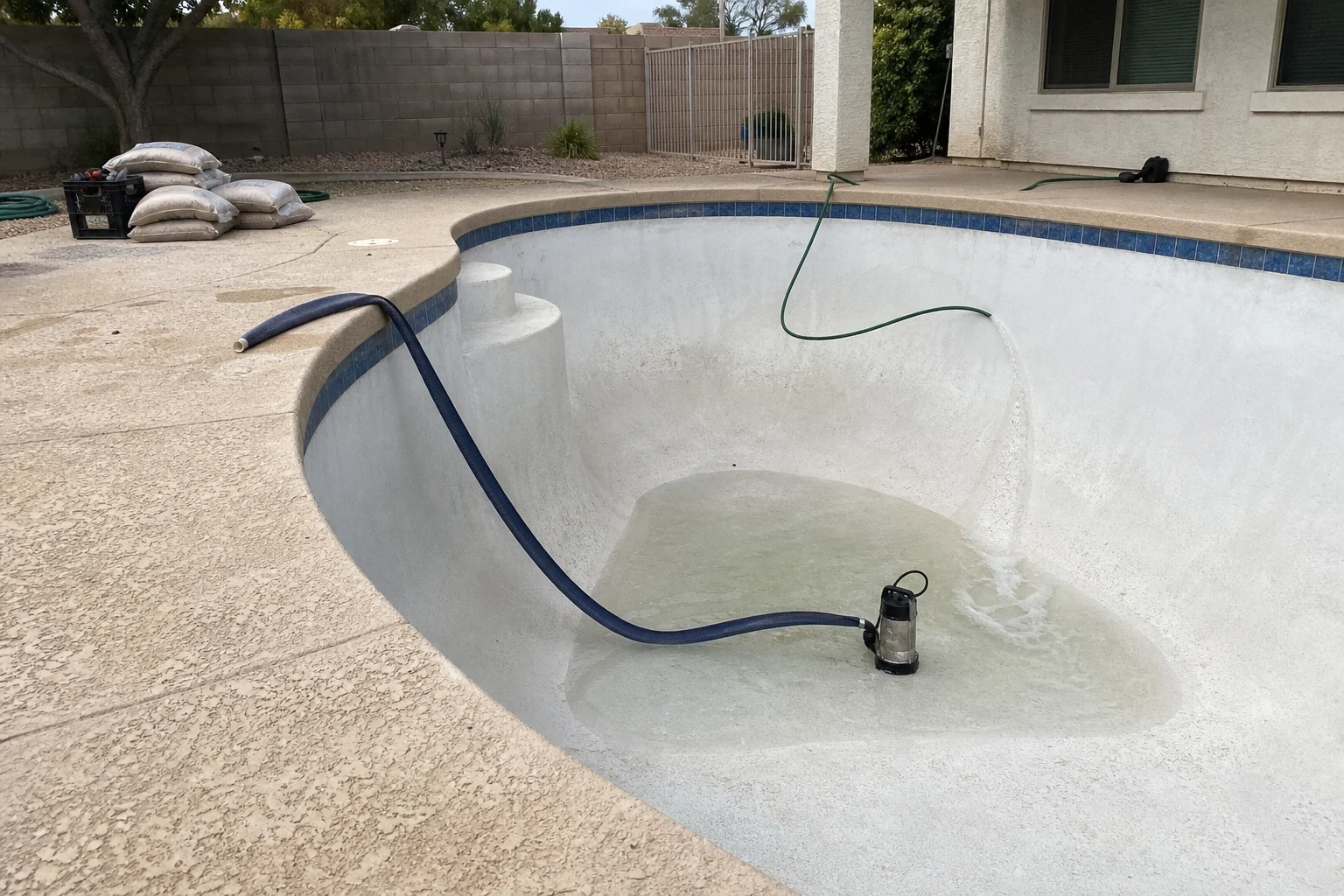
Old pool water reaches a point where adding chemicals stops working. We pump it out at a controlled rate, inspect the bare surface while it is exposed, then refill and balance the new water. The same small crew handles every step.
Why pool water eventually has to go
Water leaves a pool by evaporation, but the minerals and chemical byproducts stay behind. Every top-off adds more calcium, and every bag of stabilized chlorine adds cyanuric acid. Over a few seasons, total dissolved solids (TDS), calcium hardness and stabilizer climb until chlorine works poorly, scale forms on tile and heater parts, and the water turns dull no matter how much you treat it.
A drain and refill resets those numbers. Dilution with partial drains can buy time, but once cyanuric acid is very high or calcium hardness is far out of range, a full drain is usually the cheaper fix. It also gives us a rare look at the plaster, tile line, main drains and fittings without water in the way.
One crew starts the pump, watches the drain, inspects the shell and balances the refill. Nothing gets lost in a handoff between people.
What the drain and refill covers
Water testing before we start
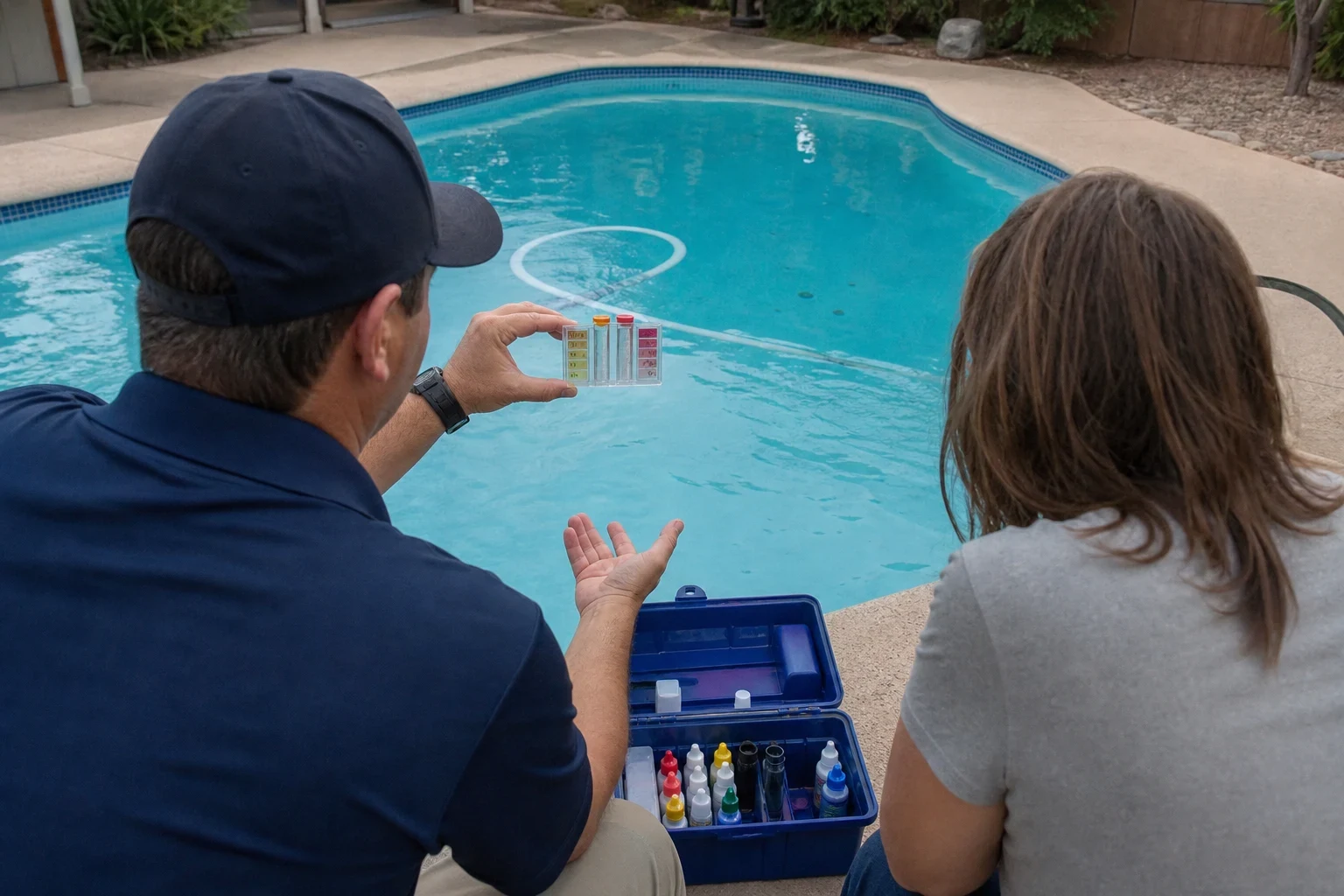
We test TDS, calcium hardness, cyanuric acid, pH and alkalinity first. If a partial drain would solve the problem, we tell you that instead of selling the full job.
Controlled pump-out
A submersible pump moves the water to the discharge point local rules allow, usually the sewer cleanout at your home. We set the flow so the line does not back up.
Hydrostatic relief check
Most plaster pools have a hydrostatic relief valve in the main drain sump. We open and inspect it so groundwater pressure under the shell has a way out while the pool sits empty.
Surface and fitting inspection
With the shell exposed, we look for plaster delamination, cracks, loose tile, worn drain covers and failing return fittings. You get photos of anything we find and a plain answer on whether it needs attention now.
Refill and start-up balancing
We refill, then bring pH, alkalinity, calcium hardness and stabilizer into range over the first days. A sequestrant is added when the fill water is hard, which keeps fresh calcium from dropping onto the plaster.
Equipment restart
We prime the pump, check the filter pressure and confirm the heater and automation come back online before we leave.
Signs your pool needs a drain and refill
- Chlorine stops holding
- High cyanuric acid binds free chlorine so it cannot sanitize. If you keep adding chlorine and still fight cloudy or green water, stabilizer is a likely cause.
- Scale keeps coming back
- White crust on the tile line and gray scale in the heater point to calcium hardness that is too high. Brushing and descaling only treat the symptom.
- High TDS readings
- Once dissolved solids run far above the level the pool started at, water tastes salty or flat and chemicals behave unpredictably.
- Surface work is scheduled
- An acid wash, replaster or tile repair needs an empty shell. Draining is the first step for those jobs.
- Water that never looks clear
- A persistent haze after the filter has been cleaned and the chemistry checked often means the water itself is worn out.
How the day runs
- 1
Test and plan
We confirm the readings, check the weather and decide the drain rate. We avoid leaving plaster empty under strong afternoon sun, since it can dry, crack and stain.
- 2
Shut down and drain
We turn off the pump, heater and automation so nothing runs dry, then start the submersible pump. Most residential pools take several hours to empty.
- 3
Inspect and clean
We open the hydrostatic valve, rinse debris from the floor and walk you through any damage we photographed. If you booked acid washes or tile cleaning, that work happens now.
- 4
Refill
Hoses go in right away to keep the shell covered. Filling usually runs into the next day depending on your water pressure.
- 5
Balance and follow up
We restart the equipment, then the same person returns to test and adjust the water until it holds steady.
What moves the price
Every pool is quoted on its own numbers, and the quote is written out line by line before we start. The main drivers are the size of the pool, the shape of the shell and what turns up once the water is gone.
- Pool volume
- More gallons means longer pump time, longer refill time and more start-up chemicals to bring the new water into range.
- Fill water chemistry
- Chandler tap water runs hard, so refills often need extra sequestrant and careful calcium management to protect the plaster.
- Added surface work
- Pairing the drain with acid washes or calcium removal and tile cleaning adds labor, but saves a second drain later.
- Condition of the shell
- Loose plaster, damaged fittings or a stuck hydrostatic valve can add repair work. We show you photos and price it before doing anything extra.
Drain and refill questions
- How often does a pool need to be drained?
- It depends on your water readings, not the calendar. Many pools in the area go several years between drains, and pools treated mostly with stabilized chlorine tablets tend to need it sooner. We test first and tell you if a partial drain is enough.
- Can draining damage my pool?
- It can if done carelessly. Groundwater pressure can lift an empty shell, and plaster left dry in the sun can crack. We check the hydrostatic relief valve, keep the empty time short and refill right away.
- What time of year is best?
- Cooler months are best. Mild temperatures let the plaster sit exposed without baking, and the new water is easier to balance. We avoid the hottest stretch of summer when we can.
- Will refilling raise my water bill?
- Yes. You pay your water utility for the fill water, and the amount roughly equals the pool's volume. We can estimate the gallons for you when we quote the job.
- Do you handle drains for fiberglass or vinyl pools?
- Those surfaces are rarely drained fully, because an empty fiberglass shell can shift and vinyl liners can shrink. We usually recommend a partial drain and explain why on the phone.
Find out if your water needs replacing
Tell us your pool size and what you are seeing. We will explain whether a full drain, partial drain or chemistry adjustment fits, and the same crew will do the work from start to finish.