ServicesAcid Washes
Acid Washes in Chandler
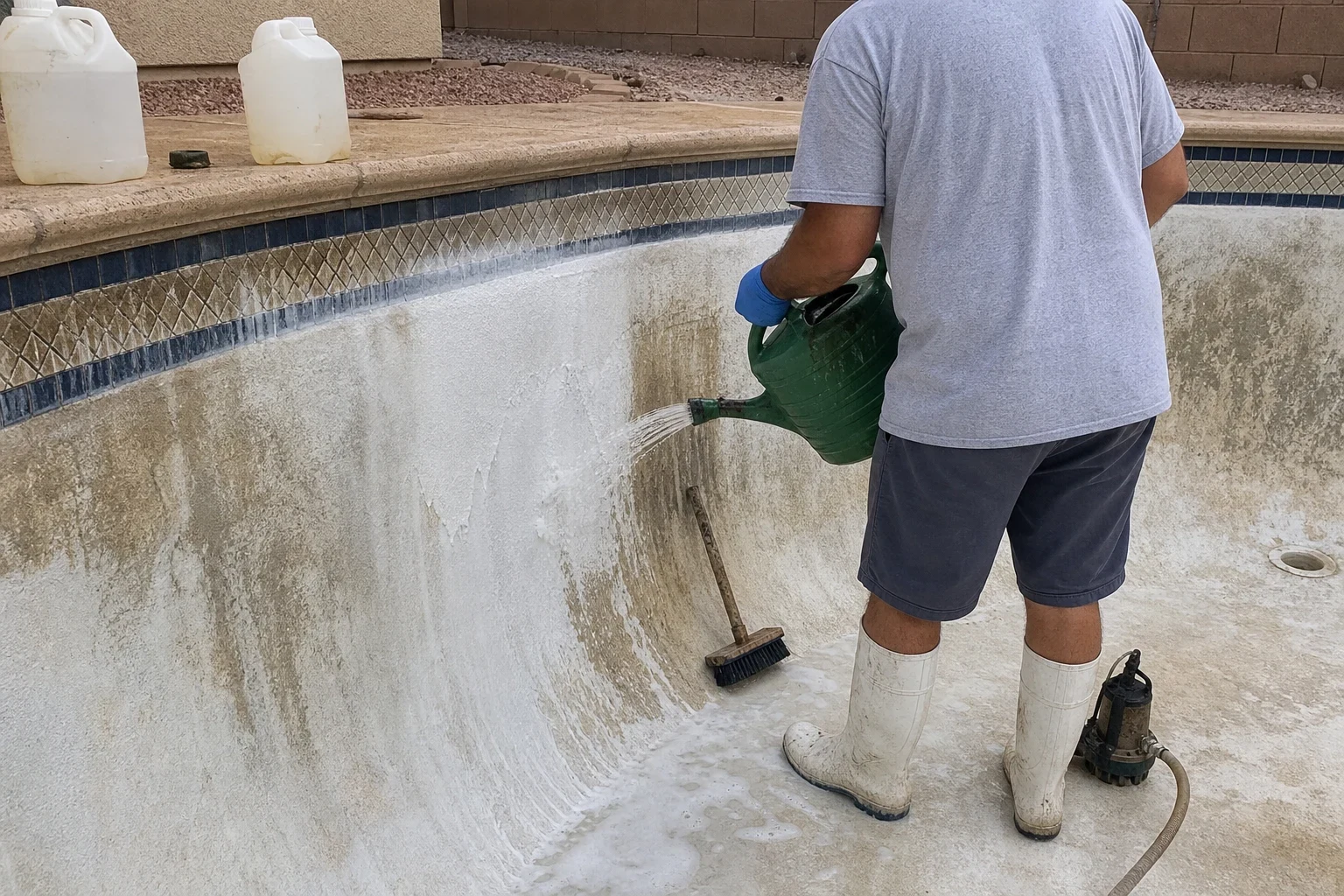
An acid wash strips a very thin layer of stained plaster to expose the cleaner surface underneath. We drain the pool, wash and neutralize the shell, then refill and balance the water. The same small crew handles every step.
What an acid wash does, and when it makes sense
Pool plaster is white cement mixed with marble dust or quartz. Over the years, minerals from hard fill water, metals from corroding heater parts or copper lines, and tannins from leaves and algae work into its surface. Brushing and chemistry only reach so far. A controlled application of diluted muriatic acid dissolves a thin skin of plaster and takes the stains with it.
That is also the limit. Every wash removes material, so a finish can only take a few over its life. If your plaster is already thin, rough or showing gray patches of exposed base, we will tell you a wash is the wrong fix and explain what the surface needs instead. Acid washing is for plaster and some exposed-aggregate finishes. It is never used on vinyl liners or fiberglass.
Because we keep crews small, the people who drain your pool are the same people who wash it and refill it. Nothing gets lost in a handoff, and you deal with one team the whole way.
What the work includes
Controlled drain
We pump the pool down with a submersible pump and route the water according to local discharge rules. An empty shell should not sit longer than necessary, so we plan the wash and refill around the drain.
Protecting plumbing and surroundings
We plug the returns and main drain line so acid does not enter the plumbing. Decking and nearby plants get wet down first, which dilutes any splash before it can etch concrete or burn leaves.
Acid application and scrubbing
Working in sections from the top down, we pour the diluted acid over wet plaster, brush it, and rinse before it bites too deep. Dwell time is the difference between a clean surface and an over-etched, rough one.
Neutralizing the rinse water
The acidic water that collects in the deep end is neutralized with soda ash and tested before it is pumped out. We check the pH instead of guessing.
Inspection while it is empty
An empty pool shows things water hides. We look at the waterline tile, grout, light niche and fittings and take photos of anything cracked or loose. Heavy calcium on the tile is its own job, covered under Calcium Removal and Tile Cleaning.
Refill and start-up chemistry
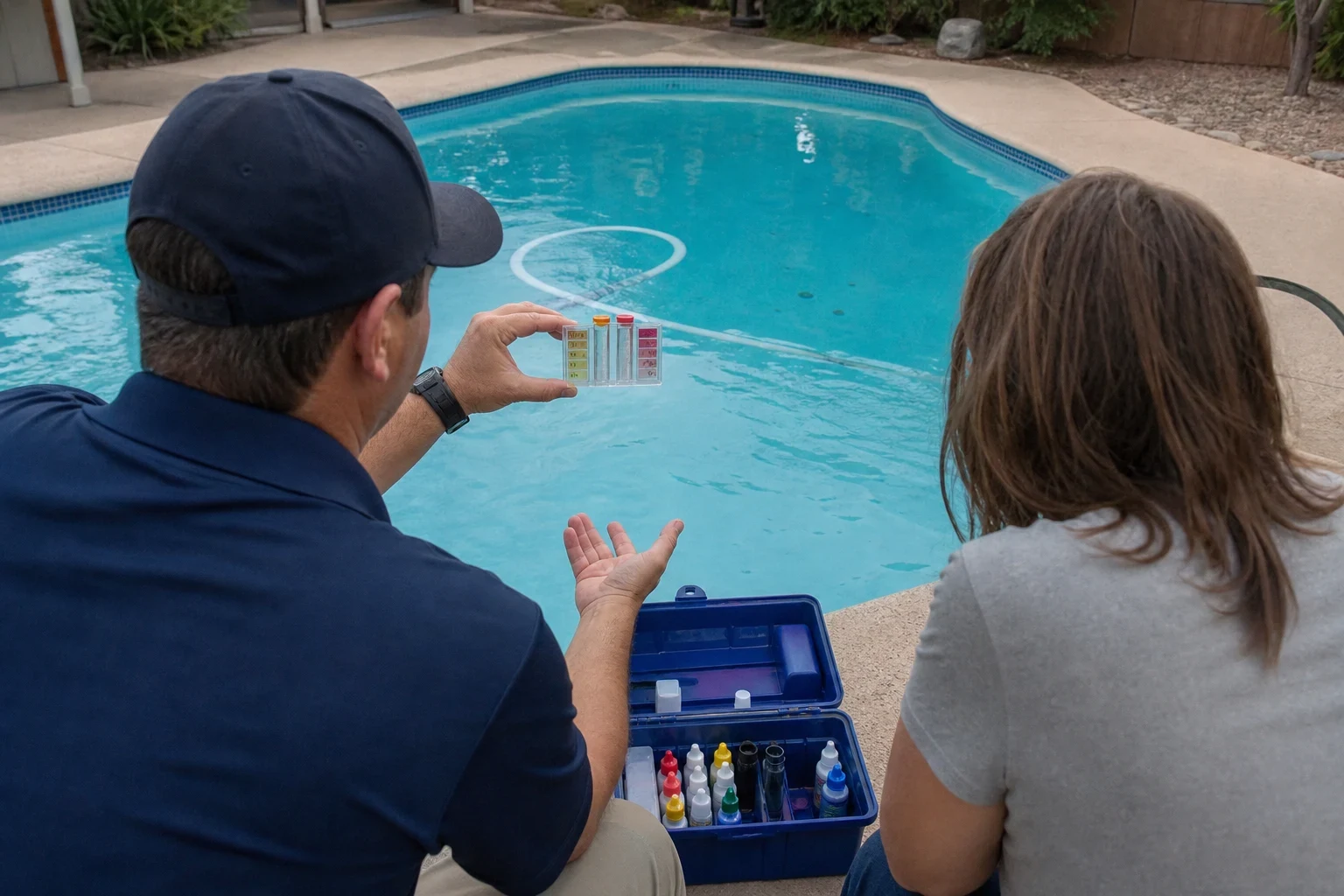
Freshly exposed plaster reacts with the water for the first few weeks. We balance alkalinity, pH and calcium hardness on the new water so the surface does not start pitting or scaling right away.
Signs your pool is ready for an acid wash
- Stains that brushing will not move
- Brown, green or gray blotches that stay after a hard brushing and a chlorine treatment are usually set into the plaster itself, not sitting on top of it.
- A dull, gray finish overall
- When the whole pool looks dingy even with clear water, years of fine dirt and minerals have built up across the surface.
- Shadows left after an algae bloom
- After a green pool is cleared through Green to Clean Recovery, dark outlines of the algae can remain on the walls and floor. A wash removes them.
- Rough scale on the plaster
- Calcium scale feels like sandpaper, snags swimsuits and traps dirt. Chandler's hard tap water makes this a common problem as pools age.
- Rust or blue-green spots
- These often come from iron or copper in the water. A wash removes the stain, and we look for the metal source so it does not come right back.
How the job runs
- 1
Free quote by phone
Tell us about the pool and the stains and we give you a free quote. Before any work starts, we look at the plaster in person to confirm it has enough thickness left to wash safely.
- 2
Shut down and drain
We turn off the pump so it cannot run dry, then start the drain. Depending on size, this takes most of a day.
- 3
Wash, neutralize, pump out
With the shell empty and still damp, we wash section by section, then neutralize and test the rinse water before removing it. In hot weather we start early so the acid does not dry on the plaster before it is rinsed.
- 4
Refill and balance
The refill begins as soon as the shell is rinsed clean. Once the pool is full, we restart the pump and filter and balance the water for new plaster.
What moves the price of an acid wash
Every acid wash includes the drain, the wash itself and the refill, so the price reflects more than the acid. We give you a free quote by phone and confirm it once we have seen the surface. Two pools of the same size can need very different amounts of work.
- Pool size and depth
- More surface area means more acid, more scrubbing and longer drain and refill times.
- Type of staining
- General dirt comes off in one pass. Metal stains or heavy scale can need a stronger mix, a second pass or a targeted treatment.
- Finish type and condition
- Pebble and quartz finishes need a gentler approach than standard white plaster, and older, thinner plaster has to be worked more carefully.
- Access to the pool
- Tight side yards or long runs from the pool to a discharge point add hose, setup time and labor.
- Other work while it is empty
- Tile cleaning or a filter cleaning is often easiest to do in the same visit, and we can quote them together.
Acid wash questions
- How long will my pool be out of use?
- Most acid washes take about two days from the start of the drain to a full pool, depending on size and your water pressure for the refill. Swimming can resume once the new water is balanced. We will tell you when it is ready.
- Will an acid wash make my old plaster look new?
- It will make it much cleaner, but it cannot fix plaster that is worn thin, cracked or delaminating. Some deep stains also lighten rather than vanish. We tell you what to expect before we start so you are not paying for a result the surface cannot give.
- How often can a pool be acid washed?
- Only a few times over the life of a plaster finish, usually years apart. Each wash removes a thin layer, so we do not recommend it as routine maintenance. Good weekly chemistry is what keeps you from needing another one soon.
- Is the acid a risk to my yard, kids or pets?
- We keep people and pets away from the pool area while the acid is in use. We wet down surrounding surfaces to dilute splash, and the rinse water is neutralized and tested before it leaves the pool.
- Why not just drain and refill instead?
- A Pool Drain and Refill replaces worn-out water with high dissolved solids or calcium. It does nothing for stains in the plaster. If your water is fine but the surface is stained, the acid wash is the part that fixes it.
- What should I do after the wash?
- Brush the pool daily for the first week to keep the fresh surface even, and keep the water balanced. Our Weekly Pool Cleaning handles that for you, and the first month of weekly service is free.
Find out if a wash will clear your stains
Tell us what the plaster looks like and we will give you a straight answer on whether an acid wash is the right fix. One small crew handles your pool from drain to refill.