ServicesEquipment Installation
Pool Equipment Installation in Chandler
We install pool pumps, filters, heaters, salt systems and automation sized to your pool's volume and plumbing, not to whatever happens to be on the truck. The same small crew that quotes the job sets the pad, plumbs it, primes it and shows you how to run it.
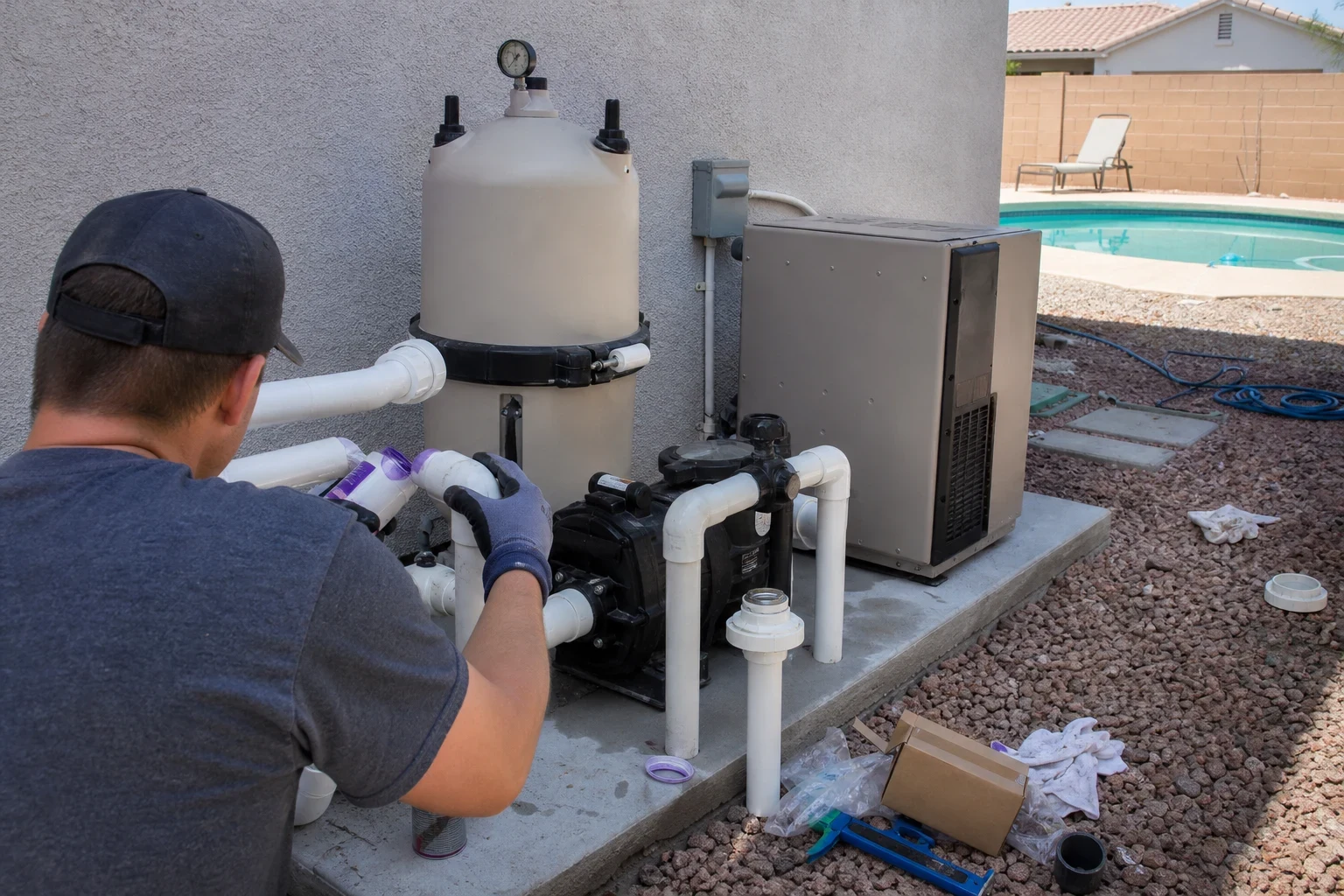
New equipment that fits the pool you have
Most equipment trouble we find after someone else's install comes down to sizing. A pump that is too big for 1.5-inch plumbing pulls air at the lid, runs loud and pushes water through the filter faster than the media can catch debris. A filter that is too small for the pump clogs within days and can short-cycle the heater. We start from your pool's gallons, the pipe diameter, the length of the run back to the pad and the features you actually use, then choose equipment that matches.
Installation is the right call when a part has failed and the repair costs close to the price of new, when an old single-speed motor is burning power all summer, or when you are adding something the pool never had, like a heater or a salt cell. If a fix makes more sense, we tell you and handle it as pool repair instead.
We work as a small crew. The person who looks at your equipment pad on the quote visit is the same person who cuts in the plumbing and starts the system, so nothing gets lost between a salesperson and an installer.
What we install and what comes with it
Variable-speed pumps
Federal efficiency rules that took effect in 2021 moved most replacement pool pumps to variable speed. We program separate speeds for filtration, cleaner and spa runs so the motor spends most of its day at low RPM, where it draws far less power and runs nearly silent.
Cartridge, DE and sand filters
We match filter area to pump flow, replumb the multiport or bypass when needed, and fit a pressure gauge you can actually read. That gauge tells you when the filter needs cleaning, and our filter cleaning service can take it from there.
Gas heaters and heat pumps
Gas heaters bring a spa up fast; heat pumps hold steady pool temperature through spring and fall. Before recommending either, we check gas line size or breaker capacity, because an undersized gas line is a common reason a new heater keeps faulting out.
Salt chlorine generators
We size the cell above your pool volume, install it after the heater in the plumbing order, and set output low enough that you are not over-chlorinating in winter. Chandler's hard water builds scale on cell plates, so we show you how to inspect them.
Automation and booster pumps
Controllers that run the pump, heater, lights and valve actuators on a schedule, plus booster pumps for pressure-side cleaners.
Plumbing with unions, then startup
New Schedule 40 PVC with unions on both sides of each component, so future service never means cutting pipe. We give primer and glue time to cure, bond the new motor to the existing bonding wire, then prime, leak-check every joint and record a clean-filter pressure baseline.
Signs it is time for new equipment
A pump that screams or only hums
A grinding whine usually means motor bearings are going. A hum with no spin can be a bad capacitor, which is a cheap repair, or a seized shaft, which on an older pump often makes replacement the better value.
Power bills that jump every summer
Single-speed pumps run at full speed for long hours in the heat. Swapping to variable speed is one of the few equipment changes that pays you back month after month.
Cracks in a filter tank or pump housing
Heat and UV make plastic brittle over time. A crack near the band clamp on a pressurized filter tank is a safety problem, not just a drip, and it calls for a new tank.
A heater that lights, then shuts down
Repeated ignition faults, soot on the heat exchanger or green corrosion from low-pH water all point to a heater near the end. We tell you honestly whether a part will fix it or whether you would be chasing failures.
Parts that are no longer made
Discontinued pumps and controllers can leave you waiting weeks for a used part. Replacing with current equipment ends that cycle.
How an install goes from quote to startup
- 1
Quote visit at your equipment pad
We measure pipe size, check the breaker panel and gas supply, note the pad condition and take photos. You get a written quote that lists every part and task on its own line.
- 2
Ordering and scheduling
Once you pick the equipment, we order it and set a date. If the job needs a new circuit or gas line work that requires a permit, we tell you up front so it is part of the plan.
- 3
Removal and installation
We shut off the breaker, drain the lines and pull the old unit. The new equipment goes on the pad, gets plumbed with unions, wired and connected to the pool's existing grounding wire, and the old equipment leaves with us.
- 4
Startup and walkthrough
We prime the system, check every joint under pressure, set run schedules and walk you through the controls. The same crew that did the work answers your questions afterward.
What moves the price of an install
The equipment is only part of the number. Labor depends on how much plumbing, electrical or gas work it takes to make the new piece fit properly. Your quote breaks out each part and each task, so you can see exactly where the money goes.
- The equipment you choose
- Pump horsepower and speed type, filter size and media, heater BTU rating and salt cell capacity all change the parts cost.
- Plumbing changes
- Going from 1.5-inch to 2-inch pipe, moving components to fit a new footprint or adding valves takes more material and time.
- Electrical and gas work
- A new breaker, a voltage change or upsizing a gas line for a heater adds labor and sometimes a permit.
- Pad condition and access
- A cracked or sloped pad, a narrow side yard or equipment tucked behind a wall makes the job slower.
Equipment installation questions
Something not covered here? (480) 582-9044
Can I buy the equipment myself and have you install it?
Often, yes. Before you buy, describe the model to us so we can confirm it fits your pipe size, flow and electrical supply. A mismatched part costs more to correct than to choose right the first time.
Will a variable-speed pump work with my existing setup?
In most pools, yes. Many variable-speed pumps run on 230 or 115 volts, and we adjust the plumbing at the pad if the port size differs. If you have a heater or a pressure-side cleaner, we set minimum speeds so each still gets the flow it needs.
How long will my pool be out of service?
A pump or filter swap is usually finished in one visit, and the pool runs again that evening. Heaters, salt systems and automation can take longer, especially when gas or electrical work is involved. We give you the expected timeline with your quote.
Should I get a gas heater or a heat pump?
A gas heater warms water quickly regardless of air temperature, which suits spas and occasional use. A heat pump costs less to run but works best when the air is mild, so it fits people who want a longer swim season. We look at your gas line and electrical panel before recommending either.
Do you install equipment for pools you don't clean?
Yes. You do not need to be on our route to get an install. If you want regular service afterward, your first month of weekly service is free, and there is no contract, so you can cancel whenever you choose.
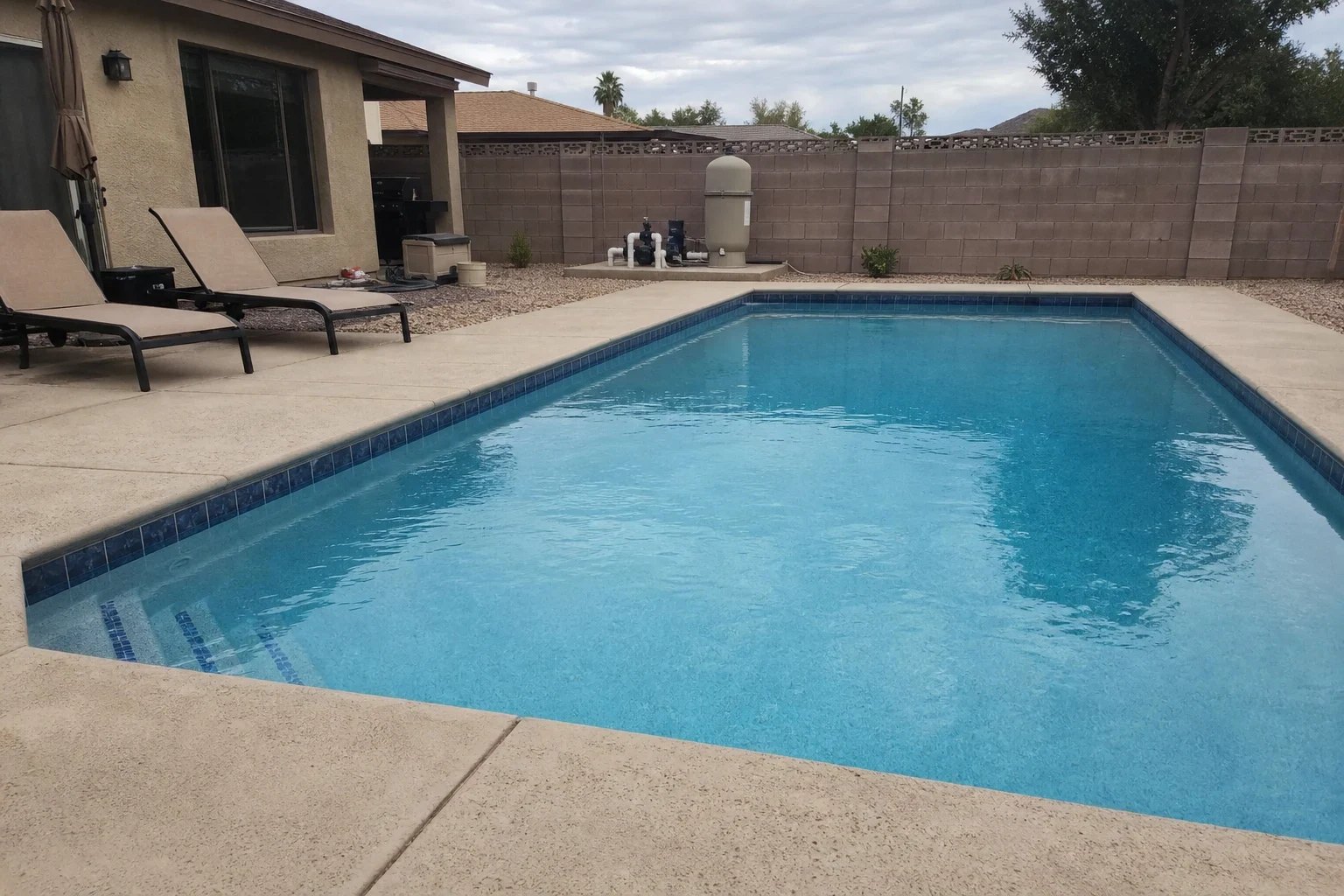
Get the right equipment on your pad
Tell us what your equipment is doing and what you want from it. We will come out, measure, and give you a free quote with every part listed.