ServicesGreen to Clean Recovery
Green to Clean Pool Recovery in Chandler
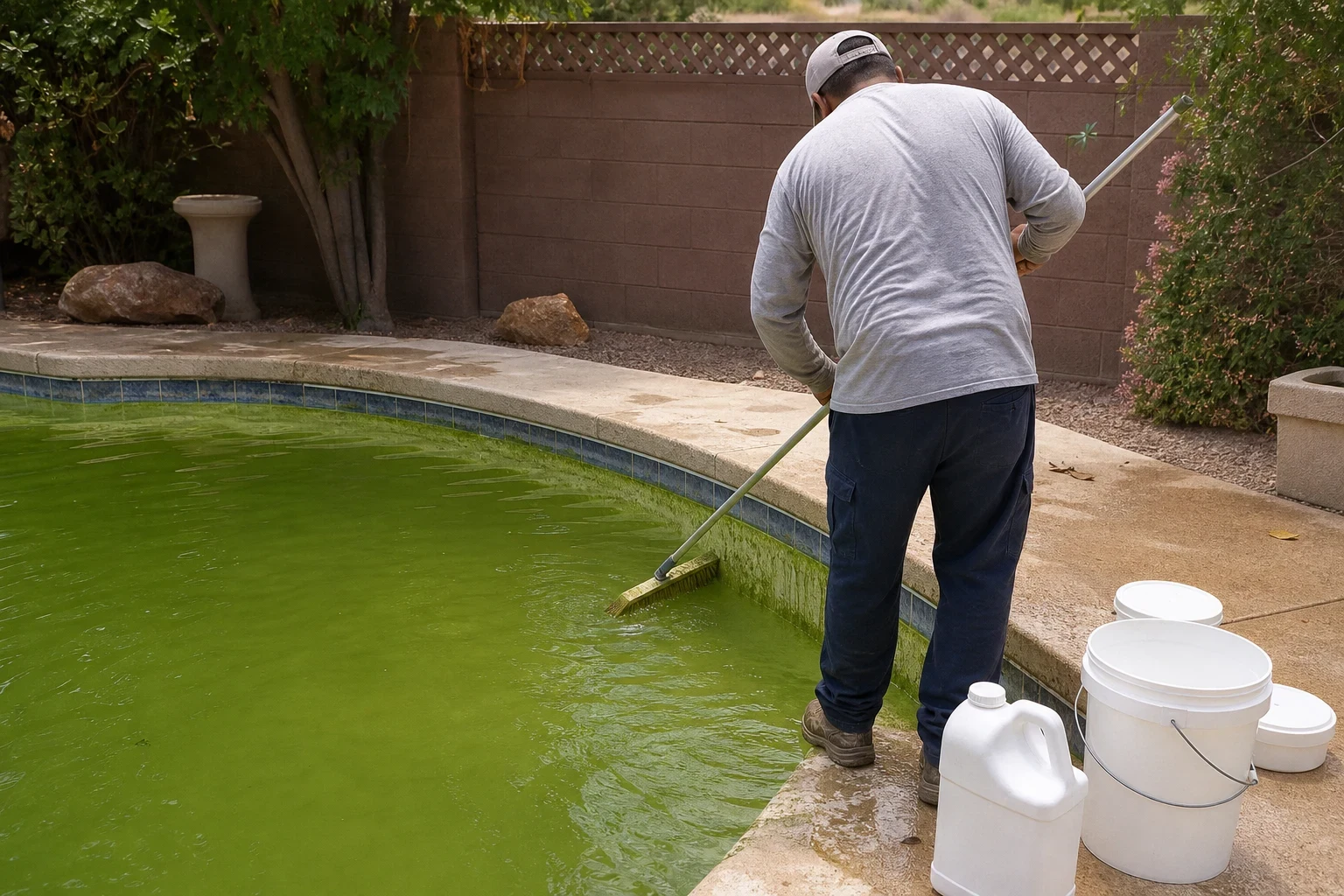
A green pool is a chemistry problem first and a cleaning problem second. We test the water, find what let algae take over, then shock, brush, vacuum and clean the filter over several visits until you can see the main drain again. The same tech handles every visit.
What green to clean recovery actually fixes
Algae blooms when free chlorine drops below what the water needs, even for a day or two. Common causes are a pump timer cut too short, a clogged filter, a failed chlorinator, or a cyanuric acid level so high that the chlorine in the water can no longer work. Pouring in more shock without fixing the cause usually buys a few clear days before the pool turns again.
Our job is to clear the water and remove the reason it went green. That means a full test of chlorine, pH, alkalinity, cyanuric acid, calcium hardness and phosphates before any chemical goes in. Sometimes the answer is a heavy chlorine treatment and a lot of brushing. Sometimes the stabilizer is so high that a partial drain is cheaper and faster than fighting it, and we tell you that up front.
Because our crew is small, the tech who tests your water on the first visit is the one who comes back to brush, clean the filter and retest. Nothing gets lost between visits, and you always know who is working on your pool.
What the recovery includes
- 01
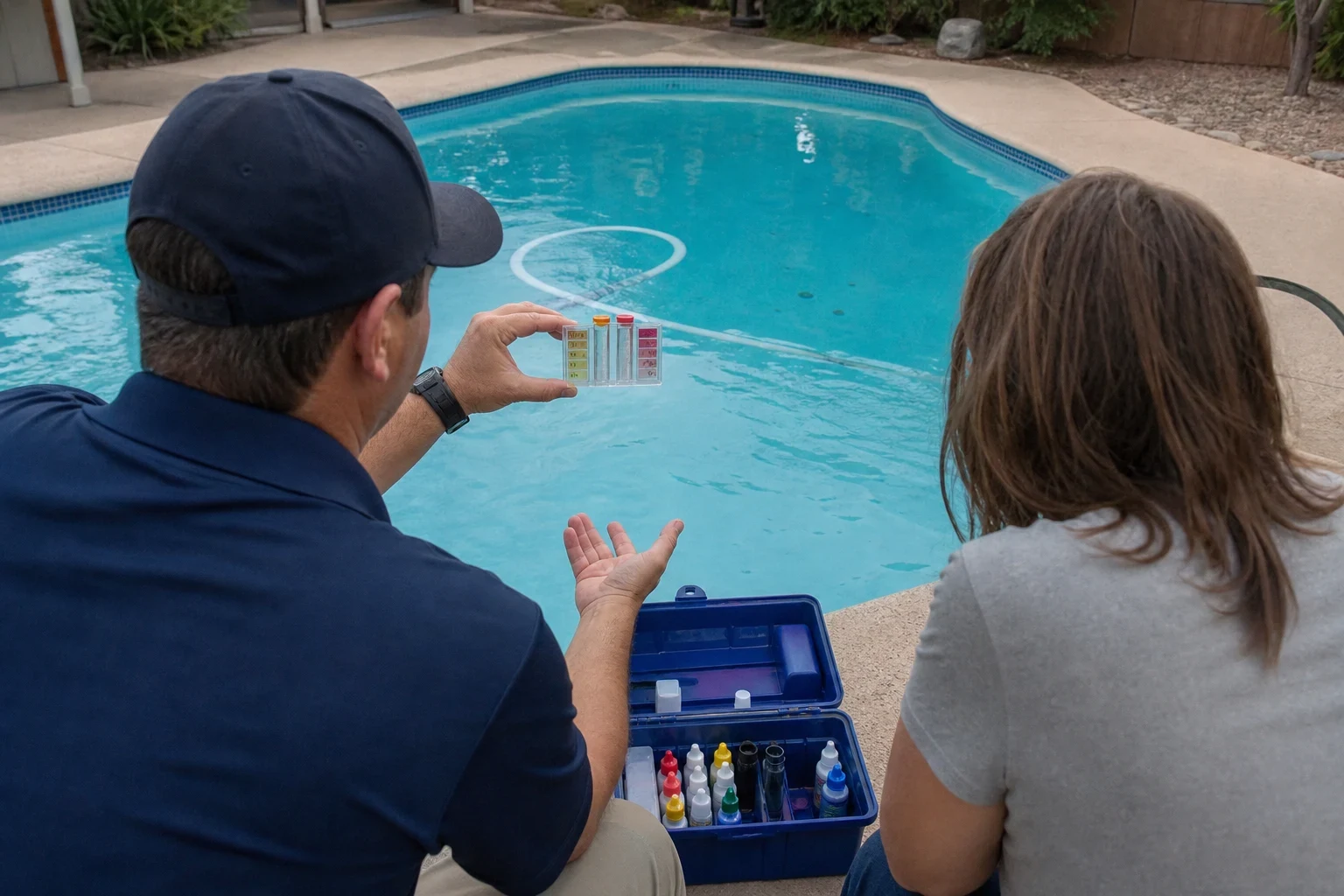
Full water test and diagnosis
We measure free and combined chlorine, pH, total alkalinity, cyanuric acid, calcium hardness and phosphates. Those numbers decide which chemicals we use and how much.
- 02
pH correction before shocking
Chlorine loses much of its strength when pH runs high, so we bring pH down into range with acid first. Shocking a pool sitting at 8.0 or above wastes product.
- 03
Shock treatment sized to your gallons
We calculate pool volume and dose liquid chlorine to reach the level needed to kill algae at your cyanuric acid reading. The target is higher when stabilizer is higher.
- 04
Brushing walls, floor and steps
Algae clings to plaster and pebble finishes, especially in shaded corners, behind ladders and on steps. We brush every surface so chlorine reaches the algae instead of sliding over a protective film.
- 05
Vacuuming dead algae to waste
Once algae dies it settles as gray or brown dust. We vacuum it to waste where possible so it leaves the pool instead of loading the filter again.
- 06
Repeated filter cleaning
Dead algae clogs cartridges, DE grids and sand beds fast. We clean the filter more than once during a recovery, because a dirty filter is often what stalls one.
Questions about Green to Clean Recovery?
Call(480) 582-9044Signs your pool needs a green to clean recovery
You can't see the main drain
If the deep-end drain is cloudy or invisible, the water has lost its sanitizer. Swimming in it isn't safe.
Green or yellow film on the walls
Slick patches in corners and on steps are early algae. A tint that comes back after brushing means it is growing faster than your chlorine can kill it.
Shock isn't holding
If you shock on Saturday and the chlorine reads zero by Monday, something is consuming it. High phosphates, high cyanuric acid or a heavy algae load are the usual causes.
A pool that sat unattended
A pool left alone for a few weeks in summer heat, or after a monsoon dust storm dropped debris and nutrients into it, often turns green quickly. Starting with a real test saves chemicals.
Pressure climbing at the filter
A filter gauge reading well above its clean baseline while the water stays cloudy points to a filter packed with organic material.
How a recovery runs, visit by visit
- 1
First visit: test and diagnose
We test the water, check that the pump, filter and timer are working, and look at the equipment pad for problems such as a stuck valve or a dead chlorinator. If something mechanical caused the bloom, we explain it before any treatment starts.
- 2
Balance and shock
We correct pH, add chlorine dosed to your volume and stabilizer level, and brush the whole pool. We set the pump to run continuously while the shock works.
- 3
Return visits: brush, vacuum, clean the filter
Over the next few days we come back to brush again, vacuum dead algae to waste, clean the filter and retest. We add chlorine as needed to keep the level up until the algae is gone.
- 4
Final balance and handoff
When the water is clear and holds chlorine overnight, we balance alkalinity and calcium and walk you through the readings. You can take it from there, or move to our weekly pool cleaning to keep it that way.
What moves the cost of a green pool cleanup
Every green pool starts in a different place, so we price after testing the water and looking at the equipment. You get the quote by phone, and we explain which of these factors apply to your pool before any work begins.
- How far the algae has gone
- A light green tint may clear in a couple of visits. Dark green or black water with debris on the floor needs more chlorine, more brushing and more trips.
- Cyanuric acid level
- Years of trichlor tablets can push stabilizer so high that chlorine barely works. When that happens, a partial or full pool drain and refill can cost less than the chlorine needed to overpower it.
- Pool size
- Chemical doses scale with gallons. A large pool with a spa spillover takes more product than a compact play pool.
- Filter type and condition
- Cartridges that are torn or worn out, or DE grids with tears, may need replacing rather than cleaning. We show you what we find.
- Equipment problems
- If a failed pump, timer or chlorinator caused the bloom, fixing it is a separate pool repair. We quote it separately so you can see the difference.
Green pool recovery questions
How long does it take to turn a green pool clear?
Most pools take several days of treatment and return visits. A lightly tinted pool can clear faster, while a pool with dark water, high stabilizer or a clogged filter takes longer. We give you a realistic estimate after the first water test.
Do you have to drain my pool to fix it?
Usually not. Draining is only worth it when cyanuric acid or calcium is high enough that chemistry alone becomes slow and expensive. If your numbers point that way, we explain the readings and let you decide.
Can I swim while you're treating it?
No. Chlorine levels during a recovery are far above normal swimming levels, and cloudy water hides the bottom. We tell you when the chlorine has dropped back into a safe range.
Why did my pool turn green again after I shocked it?
Shock kills algae, but it doesn't fix the cause. High stabilizer, high phosphates, a short pump schedule or a dirty filter can let algae return within days. Our first visit is about finding which one it is.
What happens after the pool is clear?
You can maintain it yourself, and we'll show you the readings to watch. If you'd like us to handle it, our weekly pool cleaning starts with a free first month of weekly service and has chemicals included in the monthly price. There is no contract, so you can cancel whenever you decide to.
Ready to see the bottom of your pool again?
Tell us what the water looks like and how long it has been that way. We'll give you a free quote and explain what we expect to find on the first visit.